IRL streaming infrastructure
A street stream
that holds
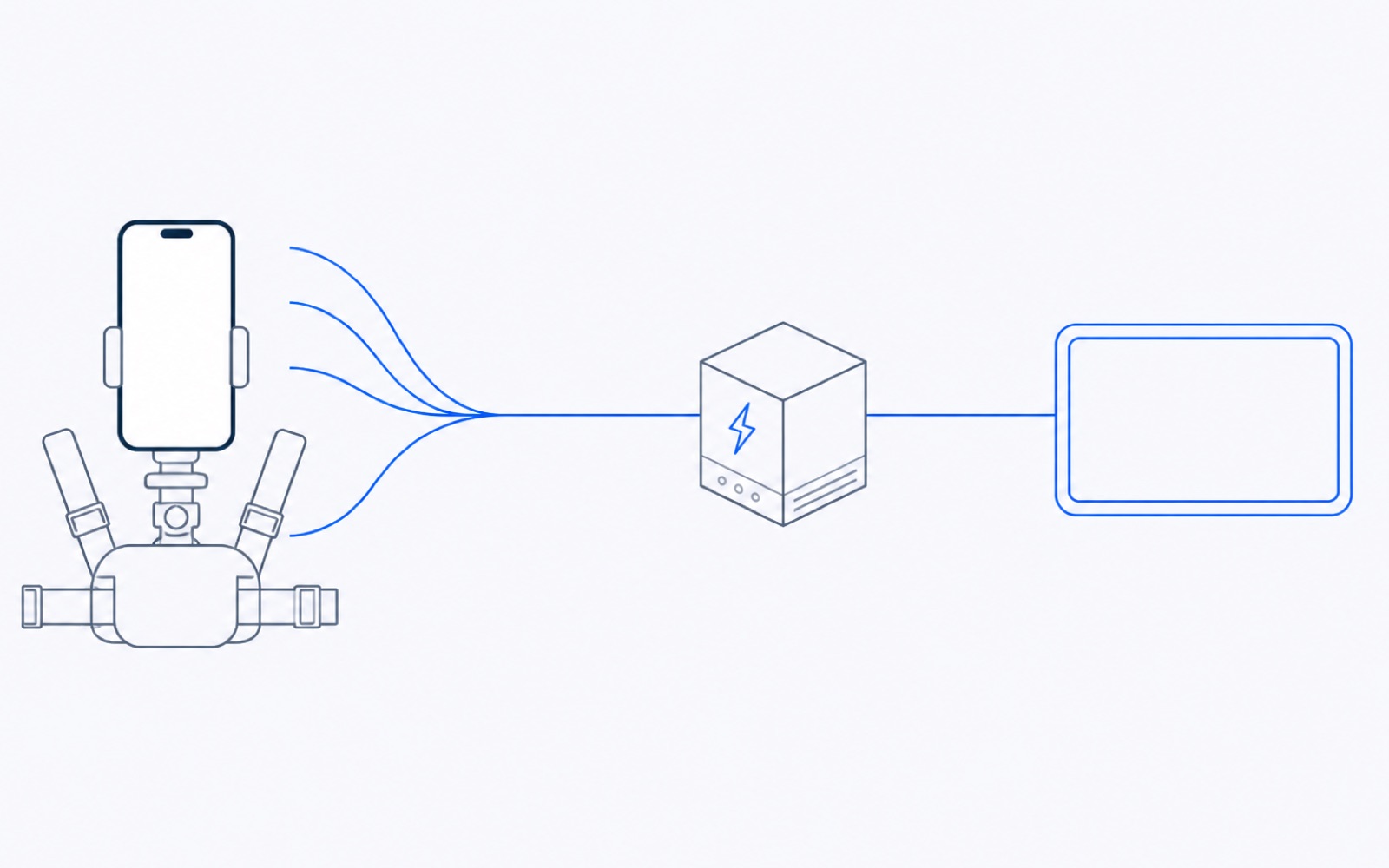
The phone pushes to the relay, the relay feeds OBS. When the link degrades the scene changes on its own, and viewers get a standby clip instead of a picture falling apart.
- SRT and SRTLA bonding
- Scene switch in 2 seconds
- Remote in Telegram
Bitrate
6.2Mbps
Link behaviour
Holding
two samples in a row
- Latency
- 28 ms
- Packet loss
- 0.1 %
Nodes
- Amsterdamrunning
- Another regionon request
The shape of a typical mobile stream: a dip in the middle and a recovery. Those dips are exactly what the automation reacts to.
How it works
Three links, nothing in between them.
- 01
Phone
Moblin or any SRT encoder pushes to the relay. Several modems combine over SRTLA into one channel — if one carrier drops, the stream keeps going on the rest.
- 02
Relay
Holds the connection, smooths jitter and passes a steady stream on. Publish and playback keys are separate: the OBS string can go to an editor without handing them the broadcast.
- 03
OBS
Takes the stream and follows the automation: bitrate drops, the scene goes to standby; the link returns, the broadcast continues. Thresholds and scene names are yours to set.
What you get
All of this works today rather than being on a roadmap.
Bonded links
SRTLA folds several modems into one stream. Encryption can be turned off for Moblin compatibility — the keys still decide who publishes and who only watches.
Automatic scenes
Polled once a second. Degrading takes two consecutive samples to act on, recovery takes one: an extra second of standby is less visible than a second of a collapsing picture.
Standby from your own streams
Instead of a static card, the BRB scene plays a random slice of your past broadcasts, from a random point, with sound. A new one every few minutes.
Stream overlays
A minimap routed along real streets, a plate with country, city, local time and temperature, and a socials strip. Position comes from live location shared in Telegram.
Telegram remote
Start and stop the broadcast, switch scenes, set the route destination, show or hide the map. Alerts when the phone drops off or the link comes back.
Telemetry
Bitrate, RTT, packet loss and jitter per publisher — the same numbers the scene automation reads before it acts.
Honest about scale
We are not selling hundreds of nodes across six continents. Here is what actually exists right now.
- Nodes
- 1
- Amsterdam, Vultr
- Concurrent streams
- 3
- ceiling of the current node
- Relay latency
- from 1 s
- set on publish
- Scene switch
- 2 s
- two consecutive samples
Nodes get added under load, not ahead of it. If you need a region closer to you, say so in the request — it moves the queue.
What it will cost
Free while the beta runs. Below is a direction, not an offer: prices settle when billing exists.
Beta
0by invite
While the service is closed, taking part is free.
- Every feature
- Hour limits negotiable
- Feedback goes straight to us
Solo
$12per month
The direction for a single streamer.
- One channel
- Overlays and bot
- Shared node
Pro
$25per month
For going live often.
- More hours
- SRTLA bonding
- Pick your node
Payment is planned through Telegram Stars and crypto. No cards yet.
Request access
Two lines about what and where you stream. A person reads these; the answer arrives in Telegram.
Request access